


In Mobile, Alabama, Africatown and the latest echo of the trafficking


Your browser is not supported for this experience.
We recommend using Chrome, Firefox, Edge, or Safari.
The walls speak volumes.
This article was published in Italian as A Mobile in Alabama, Africatown e l'ultima eco della tratta and translated into English by Google Translate.
In the South of the United States, history is told through its streets, where every stop is a voice, every building a memory that continues to be preserved. And in 2026, the journey is enriched because knowledge has the power to shape history and move mountains. The events that marked the Civil Rights Movement in the United States, and in Alabama in particular, demonstrate this and leave a profound impression.
For this reason, even a tour of the South cannot miss the sites of the Civil Rights Trail, as Travel South USA, Sweet Home Alabama, and Visit Mobile also highlight with their recommendations. Sheila Flanagan, manager and curator of the Historic Avenue Cultural Center, says, "This building is one of the few segregation-era buildings we still use and integrate into the everyday landscape of Mobile, Alabama. It opened in 1931 at the request of the African-American community, who wanted access to the library's main branch on Government Street. Naturally, that was the height of segregation, so the request was denied."
The walls speak volumes and tell the story of a difficult journey for the Historic Avenue Cultural Center and for the Civil Rights Movement itself.
"The Gulf Coast region is very different from Birmingham. Mobile was founded by the French: we had a large Creole community, free people of color, a border community between blacks and whites. So Mobile is different—and you know, we predate New Orleans. This is where Mardi Gras, the oldest Carnival in the US, was born. This says a lot about how the protests here have evolved. This is a street demonstration by the NOW group, after the assassination of Martin Luther King. The city didn't grant permission for the parade, but they marched anyway. They were met with such a massive police presence that they stopped the march and switched to an economic boycott. And yes, the Ku Klux Klan marched in Bienville Square. Mobile has been overshadowed by Selma, Montgomery, and Birmingham, but our civil rights history is unique," adds Flanagan.
Unlike most freed slaves, these survivors managed to come together and draw on memories of life in Africa to preserve their language and culture in an autonomous space.
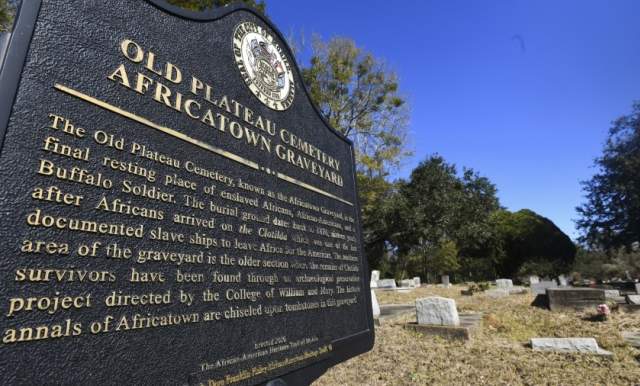
Flanagan explains that Mobile is a predominantly minority city, with more African Americans living there than any other ethnic group. And here Africatown stands out, a rapidly expanding neighborhood thanks to $2.5 million in federal redevelopment funds, but also a truly unique one: not just an African-American neighborhood, but a community founded after the Civil War by survivors of the Clotilda, the last slave ship to arrive illegally in the US in 1860.
Unlike most freed slaves, these survivors managed to come together and draw on memories of life in Africa to preserve their language and culture in an autonomous space.
The Clotilda—to which an exhibition in the city is dedicated—was sunk that same year by its owner to erase evidence of the now illegal slave trade in the Mobile River, remaining hidden for over a century until its discovery in 2019. This wreck is not just archaeology: it is material evidence of the final chapter of the Atlantic slave trade, but also a dark omen for other regions of the world where migratory flows are dominated by violence and oppression.
Cristina Giuliano is a senior editor at Askanews specializing on the global travel and tourism industry. Drawing on a professional background in Tourism and travel service management, she provides expert analysis on international market trends, tourism resilience, and the strategic development of global destinations. Her reporting blends investigative rigor with narrative storytelling, covering a wide spectrum of the industry—from the analysis of international tourism boards and large-scale hospitality policies to the promotion of sustainable models and heritage-driven travel.