The former gossip house of senators, soldiers and socialites.
All photography is credited to the author.
There are hotels that impress you, and there are hotels that make you stop mid-step and stare upwards. The Battle House Renaissance Mobile Hotel & Spa is the latter.
THE BACKSTORY
In the heart of downtown Mobile, Alabama, this grande dame of the Deep South is all sweeping staircases, glittering chandeliers and old-world swagger - a place where senators, soldiers, socialites and presidents once gathered beneath stained glass domes to gossip, plot and celebrate.
And somehow, despite its immense scale, it still feels intimate.
For travellers wanting to experience a different side of America as the country barrels towards its 250th birthday celebrations in July, 2026, there may be few more fascinating stays than this. Because while cities such as New York, Boston and Washington tend to dominate the American history conversation, Mobile quietly lays claim to some of the nation's richest - and most complicated - stories.
This is a hotel that predates the Civil War; that has burned down and been rebuilt multiple times; that served as the headquarters of future US president Andrew Jackson during the War of 1812. Today, it's one of the South's most unexpectedly glamorous stays.
The original Battle House Hotel opened in 1852, built by brothers James and John Battle on a prime corner of Mobile's bustling port district. In its heyday, this was the place to see and be seen in the South - a social hub for wealthy cotton traders, politicians and military figures arriving by steamboat.
Although the current structure dates largely to 1908, as with a lot of grand American hotels, it fell into decline, and was shuttered completely by the 1970s, sitting vacant for decades - a ghostly relic in the middle of downtown Mobile.
The hotel was ultimately revived by the Retirement Systems of Alabama - essentially Alabama's version of a giant public-sector superannuation fund - which invested heavily in restoring historic landmarks across the state.
Officially, the Battle House is a four-star property. In reality, it feels considerably more luxurious than many five-star hotels, thanks largely to its glamorous sense of occasion.
THE SETTING
Most Australians know very little about Mobile - and that's part of its charm. Perched on Alabama's Gulf Coast, about two hours from New Orleans, this port city has long been a cultural crossroads where French, Spanish, British and Southern American influences collide.
Downtown Mobile is wonderfully walkable, with vintage stores, antique shops and small galleries tucked between bars and historic buildings.
THE STYLE
The lobby alone is worth booking a room for. Guests walk through enormous brass doors into a soaring space crowned by a magnificent stained-glass Tiffany dome, where chandeliers sparkle above polished marble floors and plush seating areas.
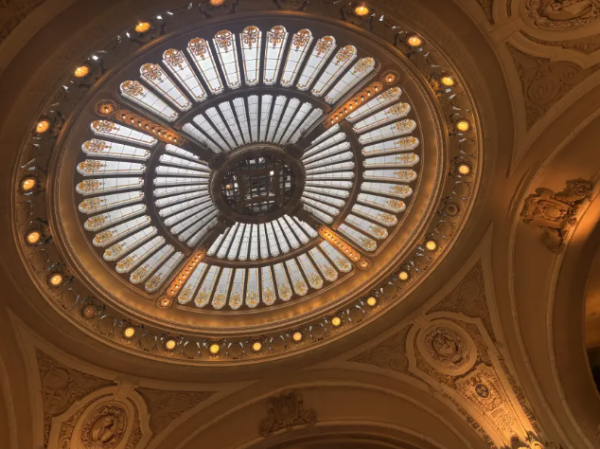
Intricate ceilings made from Tiffany glass.
It's very 1920s Hollywood glamour meets Southern political powerbroking; I half expected a jazz band to start playing in the corner.
There's also a certain seriousness to the place - echoes of military history and old Southern hierarchy woven into the grandeur. Portraits stare down from the walls. Dark wood panelling gleams. Historic details emerge the longer you look.
In the Crystal Ballroom, original Civil War-era tapestries have been reimagined into striking framed artworks, while another restored function room showcases an intricate decorative ceiling uncovered during renovations.
It's little wonder the property is recognised by Historic Hotels of America, an official program of the National Trust for Historic Preservation. The hotel has also featured on Historic Hotels of America's "Top 25 Historic Hotels Where US Presidents Made History" list.
Over the decades, its guest list has included everyone from Senator Henry Clay and General Winfield Scott to President Millard Fillmore. Senator Stephen A. Douglas reportedly spent election night here during the 1860 presidential race, while President Woodrow Wilson visited in 1913.
THE ROOMS
The hotel is divided into two sections: the lovingly restored historic wing and the newer Battle House Tower addition. Both offer spacious, elegant rooms with a distinctly classic feel - think rich fabrics, oversized beds, generous bathrooms and proper furniture rather than minimalist design-for-Instagram sterility. Rooms in the historic wing lean more traditional, while tower rooms feel slightly more contemporary, though still in keeping with the building's grand Southern aesthetic.
There are practical touches too: ironing boards, robes, large desks and coffee machines - though the latter admittedly require something of an engineering degree to operate before morning caffeine kicks in.
But perhaps the biggest surprise lies across a pedestrian skybridge connecting the hotel to its spa and wellness area. There, perched above the city, is a rooftop pool, spa and fitness complex. On a rainy afternoon, I had the rooftop pool entirely to myself - floating in warm water while grey clouds rolled over downtown Mobile. Bliss.
THE FOOD
The hotel's Trellis Room is an upscale Italian restaurant showcasing Mobile's coastal flavours, with pastas and sauces made from scratch.
But some of Mobile's most memorable food experiences happen beyond the hotel. This is a city that embraces dive bars and hidden drinking dens with equal enthusiasm. One standout is Las Floriditas, a former bank transformed into a moody Cuban-style speakeasy where guests need a daily password - posted on Instagram - to gain entry. Inside are rum cocktails, velvet lounges and serious Havana energy.
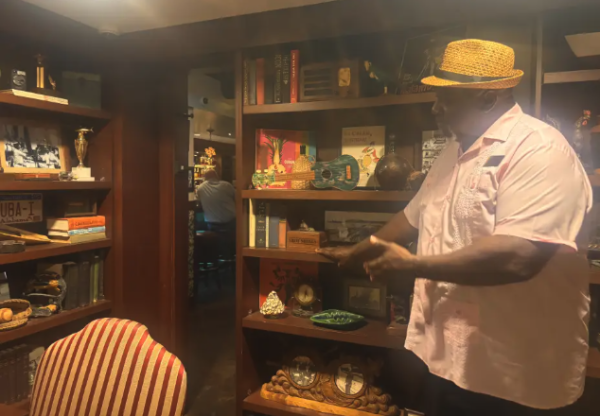
Entry to Las Floriditas is through a sliding bookcase.
Elsewhere, Mobile's seafood scene shines thanks to its Gulf Coast location, with everything from crab claws to po'boys appearing on menus across town.
THE ACTION
While New Orleans tends to grab the Mardi Gras spotlight, locals will happily (and frequently) tell you Mobile was actually home to America's first Mardi Gras celebration in 1703. The city takes the tradition very seriously - though with a more family-friendly vibe than Bourbon Street chaos. If you visit during Mardi Gras season, the Battle House becomes one of the city's prime viewing spots: from the hotel's broad balconies, guests can watch elaborate floats roll through the streets while crowds scramble for beads, lollies and the city's famous MoonPies - traditional marshmallow-filled biscuit cakes tossed from parade floats.
Beyond Mardi Gras, Mobile offers historic walking tours, museums, waterfront parks and easy access to the Gulf Coast. The USS Alabama Battleship Memorial Park is also nearby, showcasing a WWII battleship and aviation museum.
UNFORGETTABLE
Then there's the famous Whispering Corner. Tucked within the hotel is an acoustical quirk where whispers spoken into one corner can be heard clearly across the space. Over the decades, it became a discreet meeting point for politicians, businessmen and local powerbrokers wanting private conversations in public view. It's easy to imagine deals being done here over cigars and bourbon.
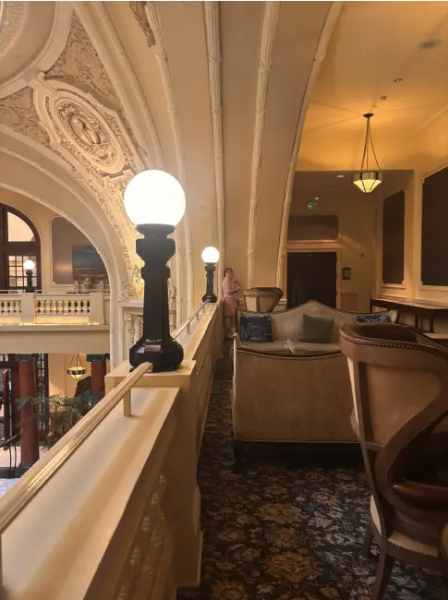
Testing out the magic of Whispering Corner.
And perhaps that's what makes the Battle House so compelling. It's not a museum-piece hotel preserved behind velvet ropes. It still feels like part of the city's living story. Messy history, glamour, politics, Mardi Gras and Southern hospitality all colliding under one extraordinary roof.
Read the article on Australia's Irrigator.com.