"It only took a few hours to realize that the city holds some truly unique stories and experiences."
All photography is credited to Paul Basso Jr. This article was published in Portuguese as O que fazer em Mobile, Alabama – 9 atrações e dicas incríveis and translated into English by Google Translate.
Anyone researching things to do in Mobile, Alabama, might not imagine how much the city can surprise them. That's exactly what happened to me. I was there for a tourism conference and, I confess, I arrived without high expectations. However, it only took a few hours to realize that the city holds some truly unique stories and experiences.
Founded in 1702 by French colonists, Mobile plays an important role in the cultural formation of the southern United States. It is there, for example, that the American Mardi Gras was born, back in 1703, decades before it gained fame in New Orleans. And it doesn't stop there: residents also argue that classic Creole dishes, such as gumbo and jambalaya, originated in the region before becoming popular in Louisiana.
Walking through the center of Mobile is an experience that helps to understand this mix. The city has some taller buildings, but without great ostentation, with quiet and well-organized streets. At the same time, there is an interesting concentration of bars, restaurants and nightclubs that liven up the area, especially at night.
The central area, in particular, resembles a more compact and "clean" version of the famous Bourbon Street. The nightlife is active, but without excesses, with spaces more accessible for those who want to get around on foot. It's the kind of place where you can have a nice dinner, a drink, and then get into the Mardi Gras spirit.
Throughout this guide on what to do in Mobile, you'll find attractions that help you understand the city's history, from the colonial period to more recent chapters in the United States. All this, of course, amidst the coolest cultural and gastronomic experiences in the area.
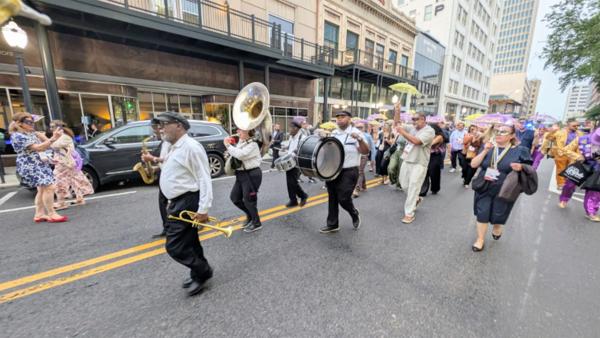
Once in Mobile, Alabama, get ready to discover a USA that goes far beyond what you see in movies and on social media. Historic and with a strong cultural influence, the city blends French tradition, African heritage, and typical Southern American elements, with attractions that help you understand different periods in the country's history.
Among the must-see attractions are the spaces linked to Mardi Gras, a tradition that originated there, as well as historical landmarks such as the USS Alabama Battleship Memorial Park and places that help to understand important chapters of American history, such as the Clotilda.
The list also includes cultural areas such as the National African American Archives and Museum and the Africatown community, as well as family-oriented attractions like the [Gulf Coast] Exploreum Science Center. In terms of gastronomy, the city reinforces its connection to traditional Southern US dishes.
The main attractions of Mobile are:
- Mardi Gras and Mobile Carnival Museum
- USS Alabama Battleship Memorial Park
- Civil Rights Trail
- Clotilda: The Exhibition
- Africatown
- [Gulf Coast] Exploreum Science Center
- Mobile Museum of Art
- Dauphin Street (nightlife)
- Senior Bowl
So, are you ready to see all of this in detail?
When to go to Mobile
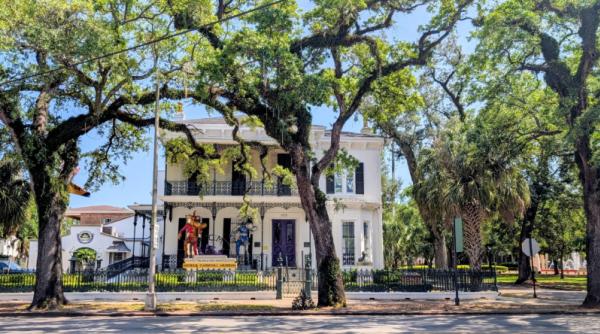
Mobile, Alabama, has the typical climate of the southern US.
The climate in Mobile is typical of the southern United States, with hot, humid summers and milder winters. Between June and September, temperatures often easily exceed 30°C, accompanied by high humidity, which can make outdoor activities more tiring.
Another point to consider is hurricane season, which runs from June to November, with the highest incidence between August and October. Although there isn't always a direct impact on the city, it's important to monitor weather conditions when planning a trip during this period.
The best time to visit Mobile is usually during the spring, between March and May, when the weather is more balanced and the city comes alive with Mardi Gras, which takes place between the end of winter and the beginning of spring. Autumn, between September and November, is also a good alternative, with milder temperatures and less humidity.
In winter, between December and February, the weather is cooler, but not extreme, allowing you to explore the city in peace. It's a less busy period, ideal for those seeking a more tranquil experience.
9 attractions in Mobile, Alabama
In two days it's possible to explore the main tourist attractions of Mobile, making it a great destination for those on a road trip through the USA or in the region for work. See what shouldn't be left out of your itinerary.
1 – Mardi Gras and Mobile Carnival Museum
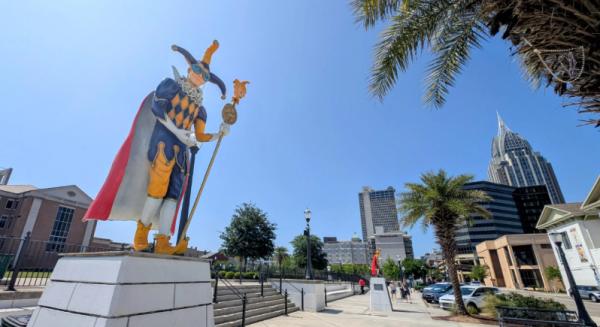
Mardi Gras was born in Mobile
Mardi Gras is not just a local tradition, but a central part of the city's identity. The first records of the celebration in the United States date back to 1703, when Mobile was still a French colony. Over the centuries, the festival has been structured through so-called mystic societies, organizations responsible for parades, dances, and the preservation of rituals that continue to this day.
Once in Mobile, it's worth seeing firsthand how this tradition is kept alive. During the official Mardi Gras period, which takes place between January and February, the city hosts various parades with floats, bands, and the distribution of gifts to the public. The celebrations are also concentrated in Mardi Gras Park, where events and performances can extend for up to 19 days throughout the program.
The best way to understand this history is by visiting the Mobile Carnival Museum, located in a historic mansion downtown. The space brings together original costumes, props, outfits of carnival kings and queens, and pieces used over decades. The exhibition helps to contextualize how Mardi Gras evolved from its colonial origins to become one of the most emblematic events in the southern United States.
After the visit, it's worth walking to Bienville Square, the central square that serves as one of the main meeting points during the parades. Scattered throughout the space and in areas near the center are sculptures known as Mardi Gras Park statues , which represent typical characters of the local carnival, such as kings, queens, and allegorical figures linked to mystic societies . The works help to visually translate the tradition and function as an open-air extension of the history presented in the museum.
2 – USS Alabama Battleship Memorial Park

USS Alabama Battleship Memorial Park
The USS Alabama Battleship Memorial Park is one of the city's most iconic attractions and one of the main military memorials in the southern United States. Located on the shores of Mobile Bay , the complex brings together equipment used by the American Armed Forces, most notably the battleship USS Alabama.
Launched in 1942, in the midst of World War II, the USS Alabama was part of the South Dakota class and became known as "Lucky A" for never having lost a crew member in combat. The ship operated mainly in the Pacific Theater, participating in strategic operations in regions such as the Solomon Islands, the Philippines, and Japan. Its role included escorting aircraft carriers and bombing enemy positions, playing a significant part in some of the final offensives of the war.
After the conflict, the battleship was decommissioned in 1947 and remained out of service until it was transformed into a memorial. In the 1960s, following a campaign led by Alabama residents, the ship was towed to Mobile and opened to the public, becoming a historical symbol of the city.
Once on board, it's possible to explore different areas, such as the deck, living quarters, command rooms, and operational spaces, which helps to understand what the military's routine was like during the conflict. The visit allows for a close-up observation of weaponry, internal structures, and technical details of the ship.
In addition to the battleship, the park houses other significant attractions, such as the USS Drum submarine, also used in World War II, and a collection of military aircraft displayed outdoors. There are also tanks, vehicles, and equipment that complement the historical collection, making the site one of the most complete of its kind in the region.
3 – Civil Rights Trail
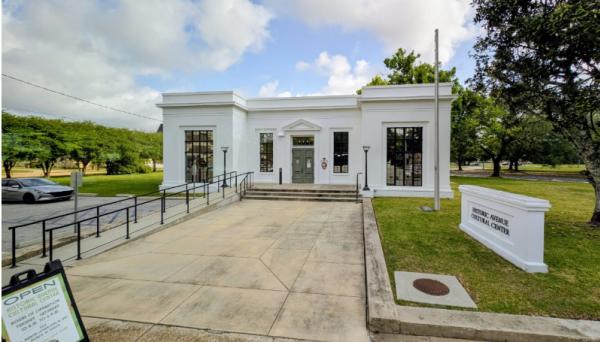
National African American Archives [Historic Avenue Cultural Center]
The Dora Franklin Finley African-American Heritage Trail is a historical route that helps to understand the presence and contribution of the African-American population in the formation of Mobile. The trail is marked by 42 black plaques with gold inscriptions, positioned at points linked to local history and the Civil Rights Movement, creating a continuous narrative throughout the city.
One of the highlights of the route is the area known as The Avenue , a region that, throughout the 20th century, concentrated businesses, cultural life, and spaces for social interaction within the Black community during a period marked by racial segregation. The area once housed theaters, clubs, and important commercial establishments, functioning as one of Mobile's main social hubs .
In this context, a visit to the National African American Archives and Museum is worthwhile, as it preserves documents, photographs, and objects related to local African American history. The collection helps to contextualize the city's development from the perspective of its residents, highlighting figures and institutions that have shaped the region.
Along the route, it is also possible to identify locations that hark back to the period before the Civil War, including the area where one of the city's slave markets operated. These points help to broaden the understanding of Mobile's history , connecting different periods and offering a more complete reading of its culture, identity, and social transformations over time.
4 – Clotilda: The Exhibition
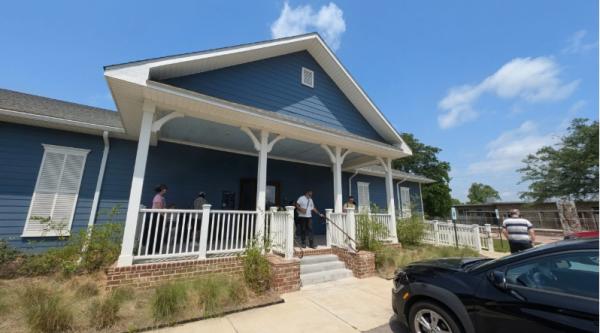
Clotilda: The Exhibition
The story of the Clotilda is one of the most relevant – and sensitive – chapters in the history of Mobile. In 1860, more than 50 years after the prohibition of the international slave trade in the United States, the ship was illegally used to transport approximately 110 Africans to the region. The operation was conducted clandestinely and, upon arrival, the vessel was set on fire and sunk to conceal evidence.
For decades, the episode remained based on historical accounts and the oral memory of the descendants of the survivors. One of the main testimonies is that of Cudjo Lewis, considered the last survivor of the Atlantic slave trade in the USA, who lived in Mobile and had his story recorded by researchers in the 20th century.
The Africans brought by the Clotilda after the abolition of slavery founded the Africatown community, maintaining customs, language, and cultural traditions for generations. This legacy is a central part of the narrative presented in the city today.
The major turning point occurred in 2019 when the ship's wreckage was finally identified in the Mobile River. The discovery provided material evidence for a story that, until then, was known mainly through documents and accounts – and which many people doubted. From then on, the city began to structure spaces dedicated to the preservation and interpretation of this episode.
The main one is the Africatown Heritage House, an interpretive center that functions as a museum dedicated to the history of the Clotilda. The space features immersive exhibits that combine historical documents, videos, objects, and accounts from the descendants of the survivors, contextualizing everything from the capture in Africa to the formation of Africatown.
During the visit, one of the most striking moments is being able to hear Cudjo Lewis's accounts. I confess I left with goosebumps. The museum also delves into the stories of other survivors, including cases like that of Sally Smith, also identified as Redoshi, who was sold to a farmer in Dallas County, Alabama. She married, had a daughter, and lived until 1937 in Bogue Chitto, being considered for a long time the last survivor of the ship.
More recent research, however, indicates that Matilda McCrear, another survivor of the Clotilda massacre, lived until 1940. These records, presented in the museum, help to illustrate how recent this story is and how its unfolding has spanned generations, reaching the 20th century with direct testimonies.
5 – Africatown
Africatown is one of Mobile's most symbolic places and is directly linked to the history of Clotilda. After the end of the Civil War and the abolition of slavery, the Africans who had been illegally brought on the ship decided not to disperse. Without the resources to return to Africa, they founded their own community there, based on their traditions, language, and social organization.
The goal was clear: to recreate, as much as possible, the way of life they had in their homeland. For years, Africatown functioned as a relatively isolated hub where African customs were preserved, including cultural and religious practices, and even community leadership structures. This aspect makes the place a rare case in the United States.
When visiting the region, it's possible to see how this history is still present. Churches, cemeteries, and historical landmarks help tell the story of the founders and their descendants. Many of these points are connected to the Dora Franklin Finley African-American Heritage Trail, which broadens the understanding of the African-American presence in the city.
In recent years, Africatown has received more attention, especially after the identification of the Clotilda shipwreck in 2019. Revitalization projects and cultural initiatives have sought to preserve local memory while promoting development for the community.
6 – [Gulf Coast] Exploreum Science Center
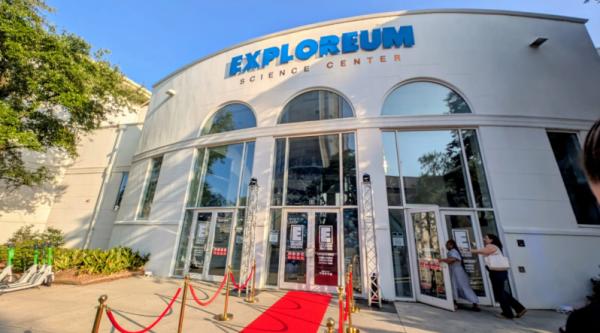
[Gulf Coast] Exploreum Science Center
The Gulf Coast Exploreum Science Center is one of Mobile's premier science and technology attractions, focusing on interactive experiences. Located in the city center, the space is designed to stimulate curiosity through hands-on activities, working well for those traveling with children, but also for adults interested in more dynamic offerings.
The museum brings together different thematic areas, with exhibitions that address concepts of physics, engineering, health, and the environment. Instead of traditional display cases, the aim is for visitors to actively participate, testing equipment, simulators, and experiments that help to understand everyday phenomena.
One of the highlights is the space dedicated to innovation and technology, with activities that explore everything from basic principles to more modern applications. The venue also features an IMAX cinema, which shows educational films and documentaries on a giant screen, enhancing the visitor experience.
The structure is well-organized and allows you to tour the museum in just a few hours, making it a good option to include in your itinerary, especially on days with unstable weather or higher temperatures. It's a complementary attraction to the city's historical experiences, offering a more contemporary counterpoint to the visit.
7 – Mobile Museum of Art
The Mobile Museum of Art is one of the city's main cultural institutions and a good option for those who want to include art in their itinerary. Located within Langan Park, one of Mobile's largest green spaces , it combines a cultural visit with a more tranquil environment, away from the city center.
The collection brings together works by American and European artists, focusing on painting, sculpture, and decorative arts. There are also collections related to the art of the southern United States, as well as contemporary pieces that help broaden the artistic landscape of the region. The exhibitions are organized in an accessible way, allowing for a fluid visit, even for those unfamiliar with the subject.
Another important point is the temporary exhibitions, which usually feature new selections and artists throughout the year. The visit can be combined with a stroll through Langan Park itself, which has a lake, trails, and open areas.
8 – Dauphin Street (nightlife)
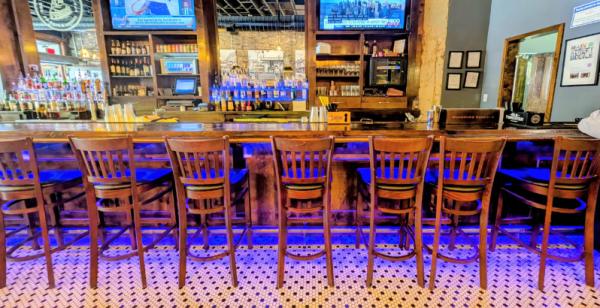
There are many bar options in the area.
Dauphin Street is the main nightlife hub in Mobile, concentrating a large number of the city's bars, restaurants, and music venues. Located in the historic center, the street features restored old buildings, creating an atmosphere that blends tradition and contemporary movement.
Walking around the area, especially at night, you can see the variety of options. There are bars with live music and more relaxed pubs, as well as restaurants that stay open late.
The atmosphere is reminiscent, on a smaller scale, of famous streets like Bourbon St. in New Orleans . One of the local guides even told me that he often calls that stretch of Bourbon St. "clean." I would say that it's not even worth comparing the destinations. The best thing to do, once in Mobile , is to enjoy Dauphin Street after the sun goes down.
9 – Senior Bowl
The Senior Bowl ... is one of the most important sporting events held in Mobile. Played annually, usually in late January or early February, the game brings together some of the top college football players in the United States in the final stages of their academic careers.
More than just a game, the Senior Bowl serves as a direct showcase for the NFL. During the week leading up to the game, coaches, coordinators, and scouts from the franchises attend intensive training sessions, interviews, and technical activities. It is during this period that many athletes solidify or improve their draft standings.
In practice, the event has a real impact on the formation of professional teams. Several players who stand out in the Senior Bowl end up being selected in the early rounds of the NFL draft, which makes Mobile, even if only for a few days, one of the most watched centers of American football in the country.
The game takes place at Hancock Whitney Stadium and brings excitement to the city with a program that goes beyond the match itself, including open practices and parallel events. For those in the region during this period, it's an opportunity to closely follow the process that precedes the entry of new talents into the world's premier American football league.
Where to eat in Mobile

Some argue that the first gumbo recipe is from Mobile - Not New Orleans.
Mobile's culinary scene accurately reflects the region's cultural mix, with French, African, and Southern United States influences. Dishes like gumbo, jambalaya, and seafood frequently appear on menus, often in versions that locals themselves attribute to the recipes' origins.
Dauphin's
Dauphin's is located atop a building in the city center and offers one of the best views in the city. The menu combines Southern cuisine with French influences, featuring seafood dishes. It's a more sophisticated option, recommended for dinner.
I went for the fish of the day, which was a wonderful red snapper with tequila sauce and vinaigrette, accompanied by crab meat. There are also good options for seafood pasta and succulent cuts of meat.
Debris PoBoys & Drinks
Located in the historic center, this place serves a delicious poboy (a typical Southern US sandwich). They have several options. I risked the fried oyster and it was a hit. Delicious. Tip: the small one is enough and the large one is easily enough for two people.
Ruby Slipper Café
Ruby Slipper Café is quite popular for brunch. Originating in New Orleans , it serves Southern classics like eggs Benedict, waffles, and Creole-inspired dishes. It tends to get very crowded on weekends.
Wintzell's Oyster House
Wintzell's Oyster House is one of the city's most traditional names. Founded in 1938, it's known for its oyster dishes, served in various ways. The ambiance maintains classic characteristics.
The Noble South
The Noble South works with local ingredients and a seasonal menu. The aim is to reinterpret Southern cuisine using contemporary techniques. It is frequently cited in recent gastronomic guides.
Callaghan's Irish Social Club
Callaghan's Irish Social Club is a historic bar with a relaxed atmosphere. It's located off the beaten tourist track and is frequented by locals. The highlights are the burgers and live music.
NoJa
NoJa combines Mediterranean and Asian influences in a more intimate setting. It's located downtown and often appears on lists of the city's best restaurants.
Where to stay in Mobile
There are many hotel options in Mobile , but for first-time visitors, staying in the historic center is highly recommended. This is where the main attractions are located, along with bars, restaurants, and the area's nightlife, making it easy to explore everything on foot.
The Battle House Renaissance Mobile Hotel & Spa
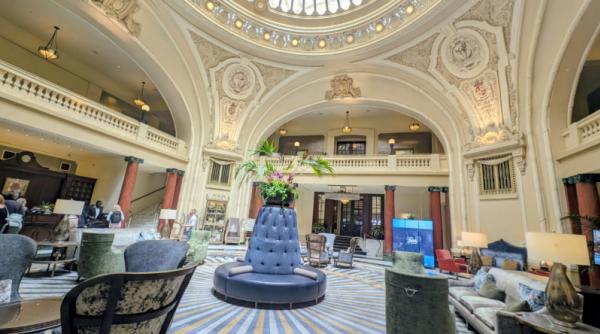
The Battle House Renaissance Mobile Hotel & Spa
I stayed at The Battle House Renaissance Mobile Hotel & Spa , one of the most traditional and highly rated accommodations in the city. Originally opened in 1852, the hotel is part of Mobile's history and has undergone a major restoration, maintaining its classic style while incorporating a modern structure.
Located in the city center, it offers easy access to attractions such as Dauphin Street and other historical landmarks. The property features older, yet spacious rooms, elegant common areas, and a full-service spa, making it one of the best options for those seeking comfort and a great location.
Another highlight is the architecture, with historic halls and décor that evokes the past of the southern United States. It's a hotel that combines historical experience with modern hospitality standards, and is frequently cited among the best in the city.
The Admiral Downtown Historic Center
The Admiral Hotel is located in the historic center and combines contemporary design with references to the city's past. I had the opportunity to visit it and was impressed by the pleasant smell of the lobby. It's worth checking out. It's a modern, well-rated option with easy access to the main attractions and nightlife.
Fort Condé Inn
Fort Conde Inn is a boutique option with a more intimate setting. Located downtown, it occupies restored historic houses and offers a more personalized experience, with fewer rooms and attentive service.
Hampton Inn & Suites Mobile Downtown Historic District
The Hampton Inn & Suites Mobile Downtown Historic District is a convenient and well-located option. It offers good value for money, comfortable rooms, and breakfast included, making it a frequent choice among travelers.
Hilton Garden Inn Mobile Downtown
The Hilton Garden Inn Mobile Downtown is another option available in the central area. With modern facilities and a convenient location, it works well for both tourism and business trips.
Find more travel tips from a native of Brazil in the full article on RotadeFerias.com and MSN Brasil.